
How XBU40 Accelerates IL4 & IL5 Compliance for Mission Owners
The Department of Defense (DoD) faces increasing pressure to modernize mission systems while maintaining strict compliance with the Department of Defense’s Cloud Computing Security Requirements Guide ( CC SRG). Meeting Impact Level 4 (IL4) and Impact Level 5 (IL5) requirements remains one of the most complex and resource‑intensive challenges for mission owners, cloud service providers (CSPs), integrators, and program offices.
XBU40 is a secure, pre‑engineered, fully managed cloud platform built on AWS GovCloud and was designed to change this dynamic. It provides a hardened, compliant foundation that reduces authorization timelines, minimizes engineering burden, and ensures mission‑assured performance from day one.
XBU40 is not just another path to IL4 and IL5 compliance, it is a faster, more disciplined way for mission owners and their CSPs to meet rising DoD cybersecurity demands without absorbing the full cost, delay, and complexity of building compliant cloud environments on their own.
A Pre‑Hardened, IL5‑Ready Platform‑as‑a‑Service
The platform provides a standardized, IL5‑ready landing zone with Zero Trust architecture, hardened networking, compliant identity and access management, and pre‑hardened operating system images aligned to STIG and CIS benchmarks. These capabilities eliminate the need to design and harden environments from scratch.
XBU40 embeds security and compliance into both deployment and ongoing operations through centralized command and control, hardened CI/CD pipelines, segmented secure enclaves, and integrated monitoring. Continuous vulnerability scanning, logging, boundary protection, and incident response testing are built into the managed service model to meet ongoing CC SRG requirements.
A shared security inheritance model allows mission owners to inherit the majority of required controls from AWS GovCloud and the XBU40 security framework. This significantly reduces documentation, implementation effort, and authorization risk.
Backed by teams with deep DoD IL4 and IL5 authorization experience, XBU40 helps organizations navigate both technical and procedural requirements while maintaining audit readiness and mission assurance throughout the system lifecycle.
Alignment with the Ten Tenets of the DoD Cybersecurity Risk Management Construct (CSRMC)
The DoD Cybersecurity Risk Management Construct defines ten strategic tenets intended to move the Department away from static compliance and toward continuous, operational cyber risk management. XBU40 was designed to align directly with these tenets, making it well suited for agencies transitioning to the CSRMC model.
1. Automation
XBU40 automates environment provisioning, security baseline enforcement, logging, and monitoring across accounts and enclaves. This reduces manual configuration, improves consistency, and supports cyber defense at operational speed.
2. Critical Controls
XBU40 prioritizes implementation and enforcement of critical and FedRAMP security controls, ensuring that the most mission‑relevant protections are continuously applied and validated rather than treated as checklist items.
3. Continuous Monitoring and ATO
XBU40 is built around continuous monitoring, with integrated vulnerability scanning, centralized logging, boundary protection monitoring, and audit readiness. This supports the CSRMC objective of maintaining a near‑real‑time authorization posture rather than point in time evaluation of events.
4. DevSecOps
Security is embedded into XBU40’s CI/CD pipelines, enabling automated testing, hardened build processes, and controlled promotion between environments. This aligns with the CSRMC emphasis on secure, agile development and rapid delivery of capabilities.
5. Cyber Survivability
XBU40’s segmented, multi‑account architecture, Zero Trust enforcement, and hardened operating system baselines are designed to support continued mission operations in contested or degraded cyber environments.
6. Training
XBU40 reduces reliance on ad hoc security expertise by providing standardized, managed security operations and repeatable patterns. This allows mission teams to focus training efforts on mission systems rather than rebuilding platform‑level security knowledge.
7. Enterprise Services and Inheritance
A core advantage of XBU40 is its shared security model. Mission owners inherit the majority of the platform and infrastructure controls from AWS GovCloud and XBU40’s security framework, directly supporting the CSRMC goal of enterprise‑level reuse and reduced duplication.
8. Operationalization
XBU40 operationalizes cybersecurity by integrating security controls, monitoring, and response into day‑to‑day platform operations. Security posture is continuously visible and actionable, not confined to documentation or periodic assessments.
9. Reciprocity
By building on standardized, widely accepted baselines such as FedRAMP High, CC SRG IL4, and IL5‑aligned controls, XBU40 supports reuse of assessments and authorization artifacts across missions and organizations, reinforcing CSRMC reciprocity objectives.
10. Cybersecurity Assessments
XBU40 supports ongoing security assessments through automated scanning, logging, and testing capabilities that integrate with threat‑informed assessment practices. This aligns with the CSRMC focus on validating security effectiveness, not just control presence.
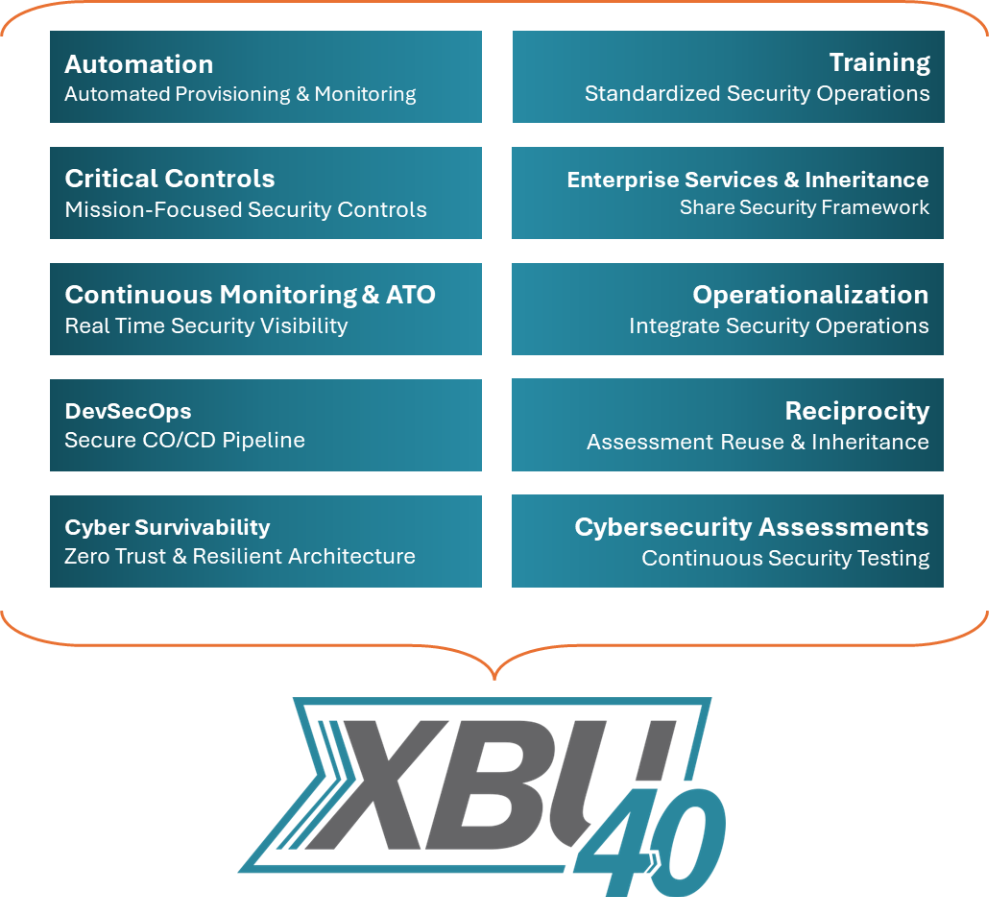
Figure 1 Alignment with the Ten Tenets of the DoD Cybersecurity Risk Management Construct (CSRMC)
Why This Matters for Mission Owners
By aligning natively with the ten CSRMC tenets, XBU40 helps mission owners move with the DoD and beyond legacy RMF workflows toward a continuous, operational cybersecurity posture. Instead of treating compliance as a series of static gates, agencies can adopt a platform that supports real‑time risk management while still meeting IL4 and IL5 requirements.
1. Reduced Time‑to‑Authorization
Pre‑engineered IL4 and IL5 ready controls eliminate months of custom design and remediation.
2. Lower Cost and Engineering Burden
Extensive control inheritance minimizes documentation effort and ongoing administrative overhead.
3. Strong Zero‑Trust, Multi‑Account Architecture
Segmentation, hardened operating systems, and IL5‑aligned IAM deliver mission‑grade resilience.
4. Continuous Monitoring Built for
Integrated scanning, boundary checks, and response testing support sustained CC SRG compliance.
5. Proven Alignment with High‑Sensitivity Workloads
Operational experience across IL4 and IL5 environments ensures alignment with real‑world DoD expectations.
6. Mission-Ready Connectivity Across BCAP, CNAP, and IAP
Pre-existing Boundary Cloud Access Point (BCAP) and Internet Access Point (IAP) connectivity, combined with Cloud Native Access Point (CNAP) implementations, helps DoD mission owners and CSPs extend mission systems into compliant cloud environments while maintaining access to critical capabilities on NIPRNet and other required enterprise networks.
Final Thoughts
Achieving IL4 and IL5 compliance is essential for protecting mission‑critical DoD data, but it does not have to be slow or overly complex. XBU40 provides DoD mission owners with a hardened, compliant, continuously monitored cloud platform that aligns directly with the CC SRG.
By reducing risk, accelerating authorization, and simplifying long‑term operations, XBU40 enables agencies to stay focused on mission execution while maintaining the highest levels of security and compliance.
Ready to accelerate your path to DoD IL4 and IL5 compliance?
XBU40 provides a pre‑hardened, IL5‑ready cloud foundation that reduces authorization timelines, lowers engineering burden, and supports continuous compliance from day one. Engage with our team to learn how XBU40 can help your organization deploy faster, inherit security controls, and maintain mission readiness at scale.
Contact us to schedule a high level demo, technical briefing, or architecture walkthrough.
References:
Department of War Announces New Cybersecurity Risk Management Construct war.gov,
Cyber Security Risk Management Construct media.defense.gov,
Continuous Authorization to Operate (cATO) dau.edu,
DoW issues replacement for risk management framework breakingdefense.com,
New DOW Cyber Construct Aims for ‘Machine-Speed’ Defense govciomedia.com